
For years, the Sony a7 series has served as the industry benchmark for the versatile, do-it-all camera. It has always been the reliable workhorse that sits perfectly between the high-resolution models and the niche speed / performance models. With the release of the Sony a7 V, that middle-ground identity has shifted. By borrowing cutting-edge technology from the flagship Alpha 1 and Alpha 9 series, Sony has turned its “standard” model into a high-performance hybrid that leaves the competition scrambling.
Quick Specs
| Feature | Specification |
|---|---|
| Sensor | 33MP Full-Frame Partially Stacked Exmor RS CMOS |
| Processor | BIONZ XR2 with Dedicated AI Processing Unit |
| Autofocus | 759-point Phase Detect with AI Subject Recognition |
| Burst Rate | 30 fps (Electronic Shutter) / 10 fps (Mechanical) |
| Video | 4K/60p (Uncropped), 4K/120p (1.5x Crop), 10-bit 4:2:2 |
| IBIS | 5-Axis In-Body Stabilization (7.5 stops) |
| Screen | 3.2-inch 4-Axis Multi-Angle Touchscreen (2.09m dots) |
| Battery Life | 750 shots (LCD) / 630 shots (EVF) |
| Price | $2,898 (Body Only) |
First Impressions / Refined Ergonomics
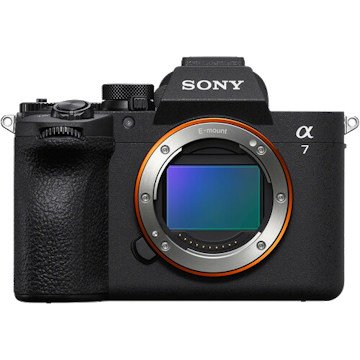
When you pick up the camera, you will immediately notice the small but helpful design changes. It still looks like a classic Sony Alpha, but the handle is deeper and shaped better than the previous model. This makes it feel much more secure to hold, especially when using larger, heavier lenses. The body is built from a tough metal frame and is protected against dust and rain, so it’s ready for tough outdoor work.
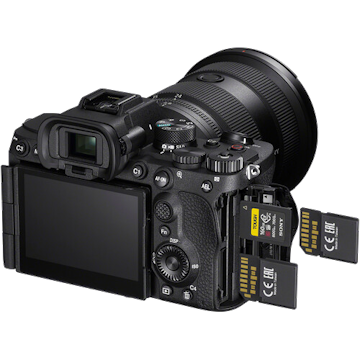
One of the best new features is the pair of USB-C ports. This means you can move files to your computer and charge the battery at the same time. This is a huge help for people who take a lot of photos or work in a studio. Even the covers for these ports have been improved so they don’t get in your way. It is clear that Sony is now focusing on the small details that make a professional’s life easier.
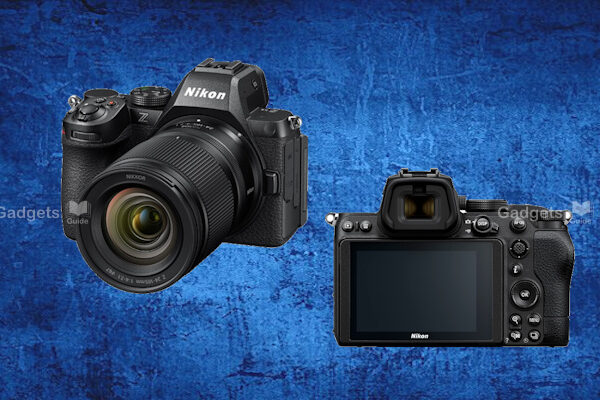
See: Nikon Z5 II – The Entry-Level Full-Frame Camera for Pros
Sensor & Image Quality
The brain of the a7 V is a new 33MP “partially stacked” sensor. While the pixel count is the same as the older model, the way it is built makes it much faster at reading information. This means you won’t see that “wobble” or distortion when moving the camera quickly during a shot.
The camera is also incredible at handling different lighting. It can keep details in bright skies and dark shadows at the same time. Because of the new processor, colors like skin tones look more natural and stay consistent even when you are shooting under tricky indoor lights. It gives you high-quality photos without making the files so big that they slow down your computer.
Speed & AI Powered Auto-focus
You no longer need the most expensive professional camera to get high speeds. The a7 V can take 30 photos every second, which is three times faster than the previous version. When you look through the viewfinder while shooting, the screen doesn’t go black. This makes it much easier to follow a moving subject without losing track of them.
Thanks to the dedicated AI processing unit, the camera recognizes and tracks subjects with terrifying precision.
- Tracking People: It can stay locked on a person even if they turn around or hide their face.
- Diverse Subject Detection: Dedicated modes for animals, birds, insects, cars, trains, and airplanes.
- Pre-Capture: A one-second buffer allows the camera to record moments that happened right before the shutter was fully pressed.
Cinematic Video & Stabilization
For hybrid creators, the a7 V finally delivers the holy grail of mid-range video. It offers 4K/60p video with no crop, oversampled from 7K. This results in incredibly sharp, noise-free footage. For those needing slow motion, 4K/120p is available, though it does incur a 1.5x (Super 35) crop.
The in-body image stabilization (IBIS) has been boosted to 7.5 stops. When shooting handheld, the “Active Mode” stabilization provides a gimbal-like smoothness that is perfect for run-and-gun documentary work. Additionally, the inclusion of S-Cinetone and S-Log3 ensures that the footage integrates seamlessly into professional color-grading workflows. The new AI Auto Framing feature even allows the camera to “follow” a subject by cropping into the sensor, making it a solo creator’s dream.
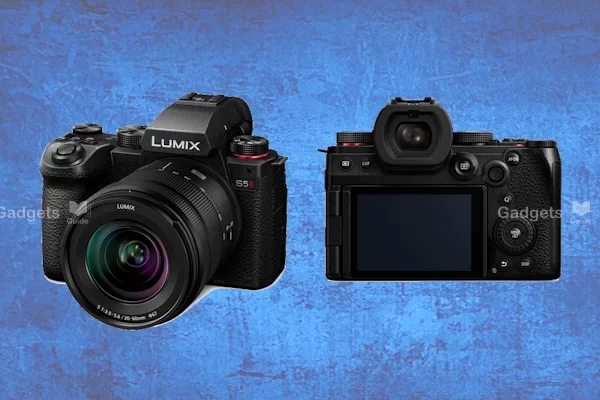
See: Panasonic Lumix S5 II Mirrorless – A Hybrid Powerhouse
User Experience & Battery
The viewing experience has seen a much-needed upgrade. The 4-axis multi-angle screen is the best of both worlds. It tilts for stealthy street photography and flips out for vlogging or high-angle work. The 2.09 million-dot resolution makes it one of the sharpest screens in its class.
Sony’s menu system continues to be the most organized in the industry. It is fully touch-navigable and highly customizable. Battery performance remains a strong point. Despite the power-hungry AI chip, the NP-FZ100 battery is more efficient than ever, easily clearing 750 shots on a single charge. It is a camera that can survive a full day on a wedding shoot without requiring a pocket full of spares.
The Value Proposition
At a launch price of $2,898, the SONY a7 V has moved up the pricing ladder. It is no longer a budget entry-point into full-frame. However, the value lies in the consolidation of features. It essentially renders the Alpha 9 II and several other specialized bodies redundant for most users.
This is the camera for the professional who needs to shoot a football match at noon and a cinematic commercial at sunset. It is a “one-camera” solution that justifies its premium price tag by eliminating the need for a secondary specialized body.
Pros
- Blazing 30 fps blackout-free shooting with minimal rolling shutter.
- Industry-leading AI autofocus that tracks almost any subject.
- Uncropped 4K/60p video with 10-bit color.
- Versatile 4-axis tilting and articulating screen.
- Significant 7.5-stop IBIS performance.
- Dual USB-C ports for modern workflows.
Cons
- Price has increased significantly compared to the a7 IV.
- 4K/120p still requires a 1.5x crop.
- No internal RAW video recording.
The Takeaway
The Sony a7 V is a masterpiece of design that works perfectly for both photos and video. It successfully bridges the gap between a hobbyist camera and a professional tool. While the higher price might make some people think twice, the incredible performance makes it worth the money for those who want one camera that can do everything.
If you are currently using an older camera like the a7 III, this is a massive step forward. For those already using the a7 IV, the choice depends on whether you need faster speeds and smarter focus. If you photograph sports, moving subjects, or high-end video, it is a great buy. If you mostly take photos of landscapes or still portraits, you might want to wait for a sale.