The tech industry spent 2024 and 2025 obsessed with making AI models as big as possible counting on parameters it processes. But as we move through 2026, the vibe has shifted. I’ve found that the real winners aren’t the companies building massive, expensive systems in the cloud. Instead, the real winners are the experts who figured out how to fit high-level intelligence directly onto the devices we carry every day.
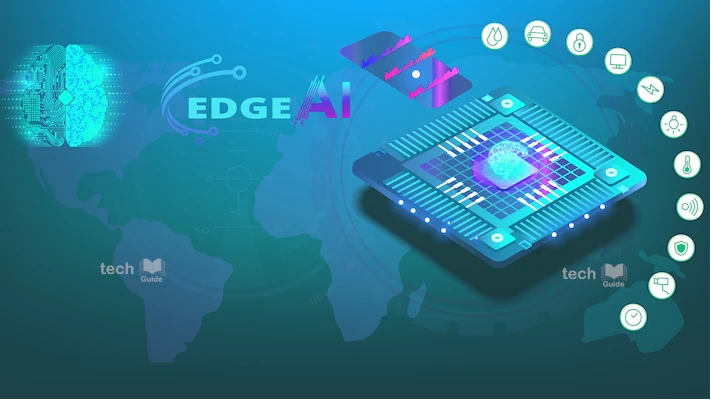
The mistake most teams make is assuming that “smaller” means “dumber.” That hasn’t been true for a while. We are currently witnessing a massive architectural pivot toward Edge-Native AI. This is not just about shrinking models to save a few cents on API calls; this is about a whole architecture shuffle – countering the 2 foundational issues – latency and data sovereignty that have kept AI from becoming truly “ambient”.
Economics on why small SLMs are winning
If you are a tech insider like me, you should have certainly started observing the recent shift in AI deployments by many large companies. The one thing prominently visible is to know that the “growth at any cost” era of AI is over. CXOs are tired of seeing cloud inference costs eat their margins. This is where Small Language Models (SLMs) and multimodal edge models have stepped in to change the game.
By moving the AI workload from a remote data center on to the user’s local hardware – whether that’s a smartphone, a high-end laptop, or a wearable – you effectively eliminate the “middleman” of the cloud. This solely on itself provides the savings boost.
When you run a model like Gemma 3 on a user’s own device, you don’t have to pay a fee for every word the AI generates. Instead, you’re using the power of the phone or computer the user already owns. For a product manager, this turns a high-cost service into a much more profitable product that is easier to grow.
Gemma 3 and Gemini 3 Flash are architecturally more efficient, smaller AI models
The release of Gemma 3 and Gemini 3 Flash changed everything. These aren’t just small improvements; they represent a total rethink of how AI uses a device’s memory and power.
For instance, in Gemma 3n, I read that it nests smaller sub-models within the larger structure and this allow developers to selectively activate only the parameters needed for a specific task. For e.g., If your app only needs text summarization in that moment, you need not load the vision or audio encoders. This level of “smart activation” lets a powerful AI run on a normal smartphone without slowing it down or crashing other apps. It also saves your battery because the AI can “power down” when it’s doing simple tasks and only “power up” for heavy lifting, like analyzing a live video feed.
At the same time, Gemini 3 Flash has mastered the “thinking” side of things. It’s built to be a digital assistant that actually gets things done – like using your apps, calling other services, and solving multi-step problems. In my tests, it’s just as smart as the massive “Pro” models we used a year ago, but it responds almost instantly. It proves to be a fine balance between performance and qualitative ability.
Speed and Privacy matters
The most exciting changes I’m seeing in 2026 are in specific areas like Healthcare and Personal Assistants. In these areas, speed and privacy are vital.
Just to highlight few use cases that I read: Imagine a doctor using a wearable device to take notes during a checkup. If the AI has to send that recording to the cloud to be processed, it takes too long. By doing the work “at the edge” (directly on the device), the summary is finished the moment the doctor stops talking.
Even more importantly, this protects your privacy. When the AI thinks on your device, your private conversations and videos never leave your phone. This makes it much easier for hospitals and banks to use AI without worrying about data leaks.
To quickly compare: Cloud AI vs. Edge AI
| Feature | Cloud AI | Edge AI |
| Speed | 2-5 second delay | Instant (less than 0.1 seconds) |
| Cost | You pay for every word | Free to run once installed |
| Privacy | Data is sent to a server | Data stays on your device |
| Internet | Needs a strong connection | Works even when offline |
What to Expect in 2026
As we move through the rest of 2026, I expect your gadgets to get a lot “aware.” We are moving past the point where you have to type into a chat box. Instead, because these smaller models can stay “on” without draining your battery, your devices will start to understand your world in real-time. Your phone will know who you’re talking to or what you’re looking at and offer help before you even ask.
In Summary
The move to “Edge AI” is the final step in making AI actually useful for everyone. By putting smart models like Gemma 3 and Gemini 3 Flash directly into our pockets, I think we have fixed the problems of high costs, slow speeds, and privacy concerns.
For anyone building tech today, the message is clear: the future isn’t in a giant data center miles away. The future is right there in the palm of your hand.