- Enterprises are abandoning the “bigger is better” AI race in favor of cost-effective, specialized models that deliver faster results.
- Small language models (below 13Billion parameters) can cut inference costs by 90% while improving response times from seconds to milliseconds.
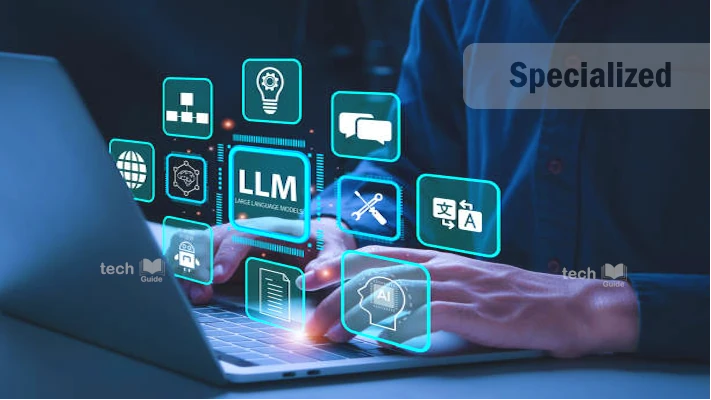
- Domain-specific fine-tuning enables smaller models to outperform general-purpose giants on targeted business tasks.
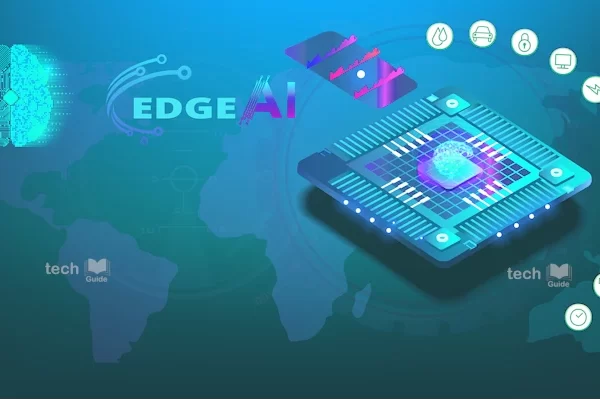
- Local and edge deployment eliminates latency, privacy concerns, and cloud dependency—making AI reliable for regulated industries.
I’ve been with the enterprise software industry long enough to recognize this pattern: the industry falls in love with “bigger,” things and that wave continues until the costs become impossible to ignore which then quietly traverse to “smarter.” We saw it with databases, with cloud infrastructure, and now it is happening in real-time with AI models.
For the past two years, the narrative has been relentless. It is a known fact that GPT4 now has 1.7 trillion parameters, Google’s Gemini is “the most capable,” and we know the next model would be even larger. But here’s what I’m seeing in actual deployment trends within enterprises. Nobody is asking for bigger anymore. They’re asking for faster, cheaper, and private. And that’s where small language models are quietly eating the market.
Why Trillion-Parameter Models Hit the Wall
This is a simple Math. Companies are spending $50,000 a month on API calls to run chat bots that answer the same 200 customer service questions. Legal teams are paying enterprise rates for models that could theoretically write a screenplay, when all they needed is a contract analysis.
The mistake most teams make is assuming that because a model can do everything, it should be used for everything. In my experience, that’s backwards. A general-purpose model is incredible for prototyping, but when you move to production, you start caring about the latency or three-second lag that makes your mobile app feel broken. You care even about the $0.02 per API call that adds up to six figures annually. You care about whether your healthcare app is sending patient data to a third-party server. That’s the wall. Not a technical wall – an economic and operational one.
Where SLMs Win in Practice
Let’s talk about what “small” actually means. Models like Microsoft’s Phi-3, or Meta’s Llama Scout variants typically range from 3 billion to 13 billion parameters. Compare that to GPT4’s 1.7 trillion, and they sound trivial. But here’s what we see: for specific business tasks, these smaller models win on three fronts that actually matter to a CXO.
Cost: Running a 7-billion parameter model shall cost roughly one-tenth the inference price of a massive cloud model. If you’re processing 10 million queries a month, that makes the difference – You could save anywhere around $5K to $50K bill.
Speed: Smaller models respond faster—sometimes in under 100 milliseconds versus one to three seconds with large cloud APIs. For customer-facing apps, that latency difference is the line between “this feels instant” and “why is this loading?”
Privacy: Healthcare, legal, finance—they can’t send sensitive data to external APIs without triggering compliance nightmares. Small models run on local servers or even on-device, which means the data never leaves the building. Imagine the convenience of portability where your AI model can work locally within a mobile device.
I know a regional bank that replaced their cloud-based document processing with a fine-tuned smaller model run on their own hardware locally. The bank was able to realize a 75% cost savings, and response times improved over 50%.
The Case for Domain-Specific Fine-Tuning
Here’s the truth that doesn’t get enough recognized – for most business workflows, you don’t need a model that knows everything. You need one that knows your thing extremely well. A general-purpose model might score 85% accuracy on a medical diagnosis task, but a 7-billion-parameter model trained exclusively on radiology reports can hit 94%. That nine-point gap is the difference between a tool doctors trust and one they ignore.
Fine-tuning is the key essence. You take a small pre-trained model and feed it thousands of examples from your specific domain – like legal contracts, insurance claims, technical support tickets. The model learns the vocabulary, the patterns, the edge cases. It stops trying to be a generalist and becomes a specialist.
I recently read about a pharma company that trained its model on their internal clinical trial documents. They see the model flags protocol deviations faster than their human review team, and because it runs locally, proprietary research never leaves their network.
Local Agents and the Browser-to-Edge Shift
The most interesting shift isn’t happening in data centers – it’s happening on laptops, phones, and factory floors. The small models I am talking about are expected to be small enough to run locally, and that will enable use cases that were impossible with cloud-dependent AI.
We are seeing Browser-based AI agents that let developers embed a full language model into a web app that runs entirely in your browser. No server calls, no latency, no usage caps etc. One of the use case I felt extremely convincing is a grammar assistant that ran locally and responded as fast as I could type.
On-device models are gaining traction in mobile apps too and will continue to do so. There are a wide range of apps that started using local models – like a travel app can translate conversations in real-time, even in airplane mode. Manufacturing plants can run defect-detection models on cameras mounted to assembly lines. Hospitals can deploy diagnostic tools on tablets that don’t require internet access.
The reason this shift is “silent” is because it’s not publicized. Local AI is slowly becoming the default for any application where latency, cost, or privacy actually matter – and that’s most enterprise use cases.
Bottom Line
The bigger-is-better era isn’t dead completely, but it’s no longer the only game in town. Small, specialized language models are winning on the metrics that enterprises actually care about – like cost per transaction, response time, and data sovereignty. For developers and architects heading into 2026, the playbook is shifting. The winning strategy isn’t about picking the biggest model – But it’s about composing the right-sized models for each job. The future isn’t monolithic. It’s modular, cost-aware, and running a lot closer to the user than most people realize.